


 Home
HomeParticle Physics Research Center of SDIAT Successfully Holds AMS Analysis Conference
Release date: 2026-04-28
Visits: 268
Source: 山东高等技术研究院
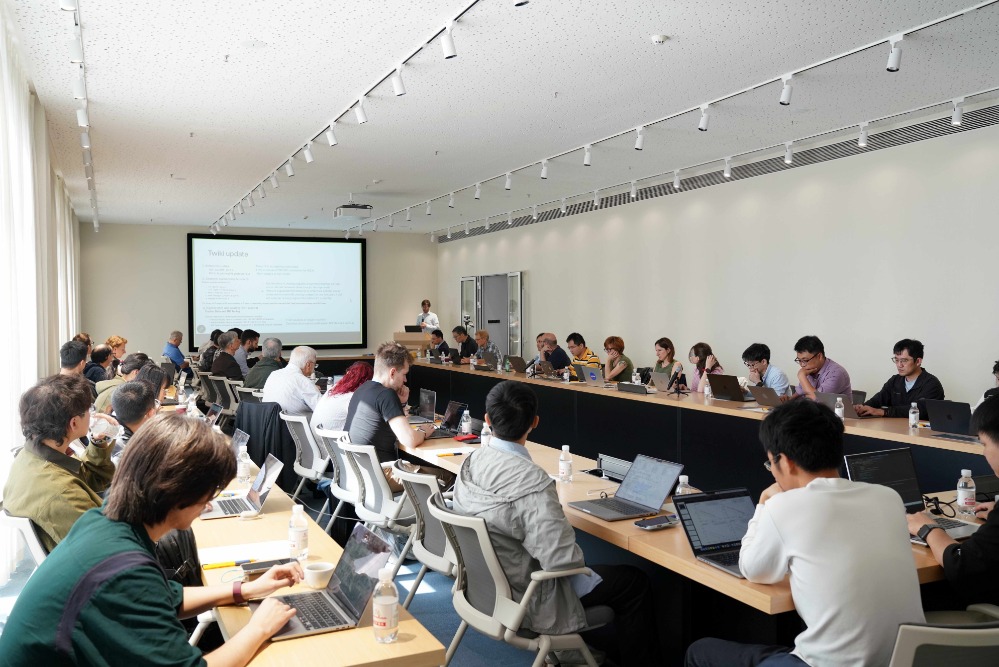
From April 20 to 24, 2026, the Particle Physics Research Center of Shandong Institute of Advanced Technology (SDIAT), together with the Institute of High Energy Physics, Chinese Academy of Sciences, co-organized the AMS Analysis Conference. The in-depth discussions centered on AMS detector upgrading, cosmic ray isotope measurement, heavy nuclear energy spectra and other research frontiers.
The Alpha Magnetic Spectrometer (AMS) is a particle physics magnetic spectrometer installed on the International Space Station. Since its operation commenced on May 19, 2011, it has collected over 260 billion cosmic ray data records. At present, the AMS Collaboration focuses on major fundamental scientific issues including dark matter, antimatter and element origin, conducting researches on electrons and positrons, antiprotons, isotopic compositions, heavy nuclear energy spectra and related topics.
Adopting a hybrid offline and online format, the conference gathered more than 60 scholars from the United States, Switzerland, Italy, Spain, Portugal, France, China and other countries for on-site participation, while other members of the AMS Collaboration attended remotely.
 ,
, ,
,

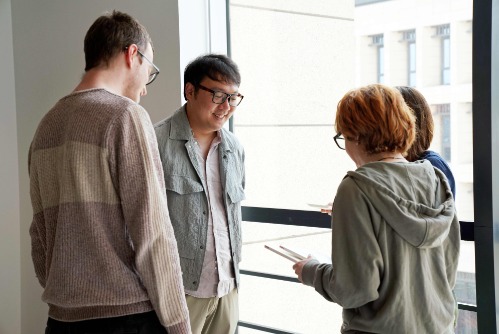
,,Through over 40 oral reports and thematic sessions, participating scholars exchanged cutting-edge research findings and data analysis experience, addressed existing challenges and technical bottlenecks, and clarified key priorities for future joint research. The AMS team from SDIAT presented the latest progress in beryllium isotope measurement, Cherenkov detector event reconstruction, cosmic ray anisotropy, and iron-group nuclear energy spectrum measurement.
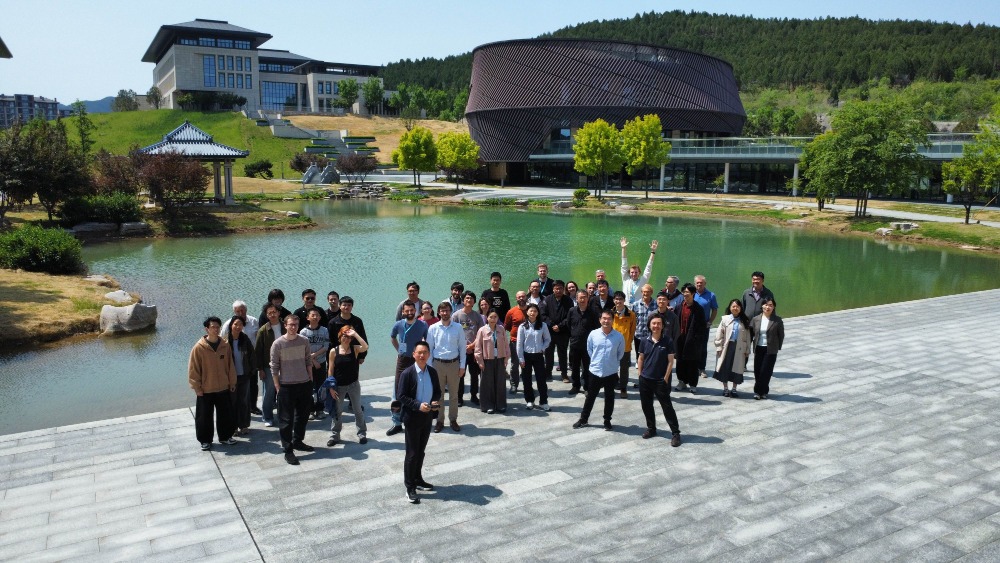
As a vital phased academic event of the AMS Collaboration, this conference has established a high-level international exchange platform, strengthened transnational cooperation in cosmic ray physics, and demonstrated SDIAT’s active participation and research competence in frontier fundamental physics. It further elevates the institute’s international influence and lays a solid foundation for delivering high-impact scientific achievements in the future.